Real-Time Webhook Integration with H2H Digital Rx
Real-Time Webhook Integration with H2H Digital Rx
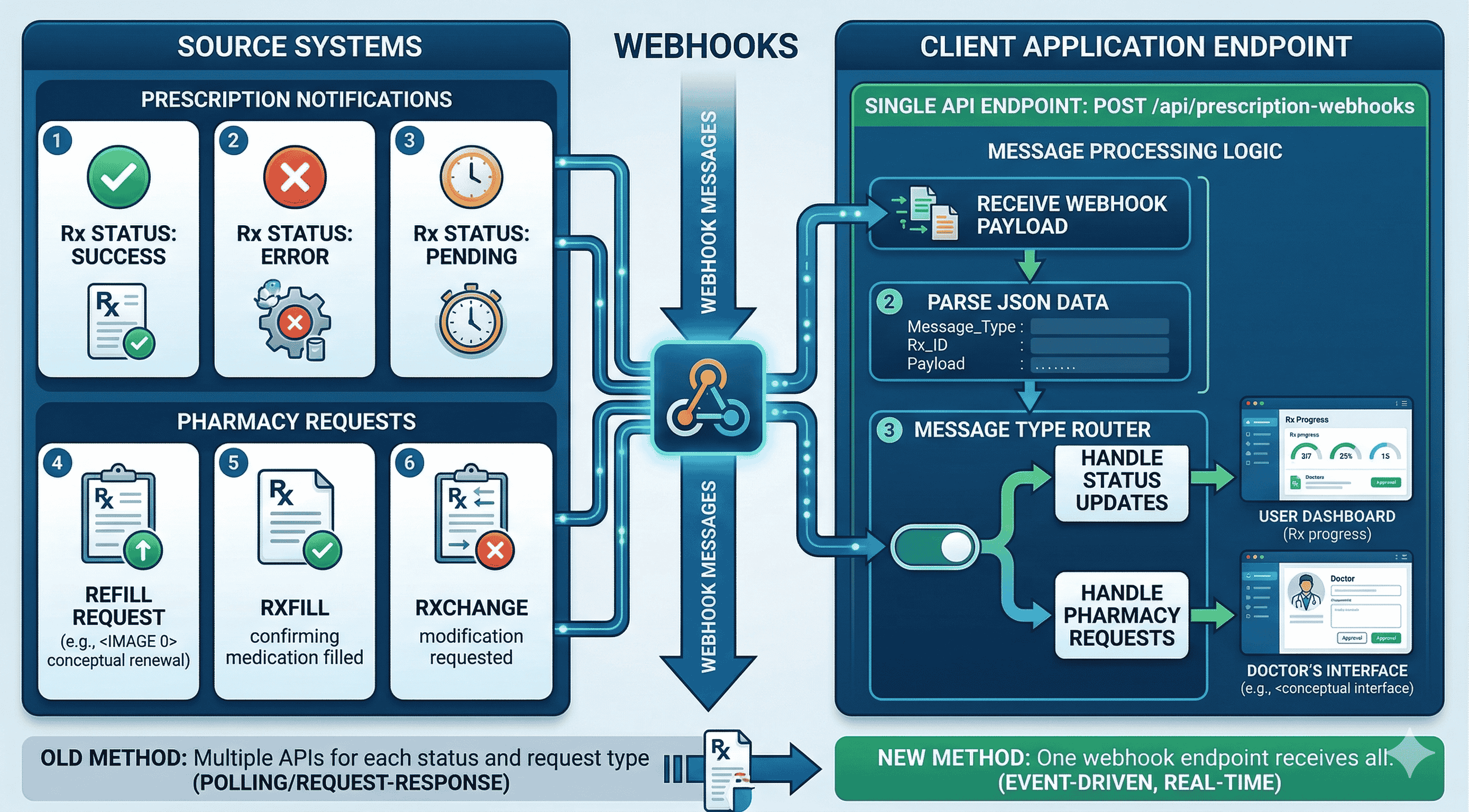
H2H Digital Rx (DRx) is evolving its integration model to provide a more efficient, real-time experience through webhook-based communication. This enhancement replaces the traditional approach of using multiple APIs for different request types and status updates with a unified, event-driven mechanism.
From Polling APIs to Real-Time Events:
Previously, clients interacted with H2H DRx by calling multiple APIs to retrieve updates for various workflows, such as prescription statuses or request changes. This approach often required frequent polling, leading to increased system load, delayed updates, and added complexity in managing multiple endpoints.
With the introduction of webhooks, H2H DRx now pushes all relevant updates directly to clients as they occur. Instead of repeatedly requesting information, clients receive a single stream of real-time notifications through a designated webhook endpoint.
How Webhooks Work?
When an event occurs in H2H DRx—such as a prescription being sent, updated, or processed—the system sends a structured notification (payload) to the client’s webhook endpoint.
Clients are responsible for processing these notifications within their systems. This typically involves:
In essence, H2H DRx delivers the event data, and clients interpret and convert it into meaningful actions within their own applications.
Key Benefits of Webhook Integration
Adopting a webhook-based model offers several advantages:
A More Efficient Integration Approach
This transition to an event-driven model represents a significant improvement in how clients interact with H2H DRx. By eliminating the need for constant polling and consolidating communication into a single, real-time stream, webhooks provide a more efficient, scalable, and responsive integration experience. Clients can now focus on processing meaningful events as they happen, enabling faster decision-making and improved coordination across their systems.